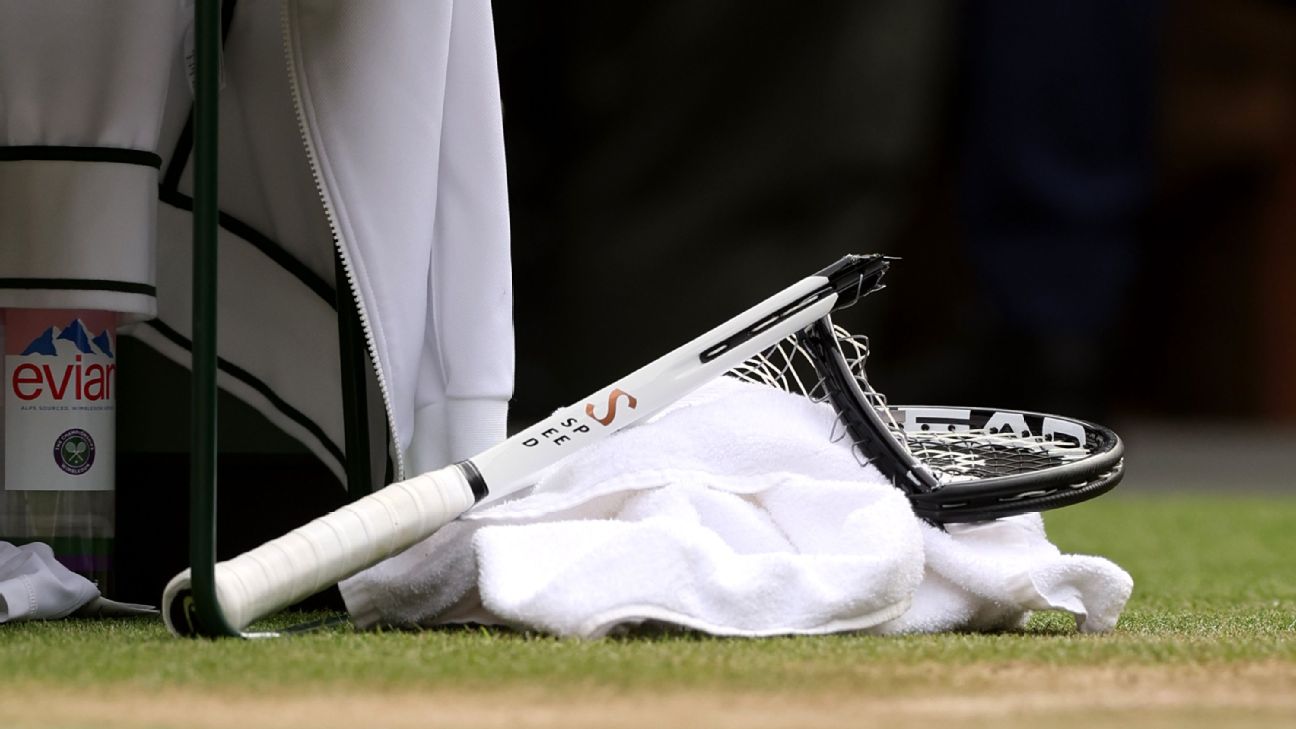
Whenever a player misbehaves on the field or court, we tend to ask the same tired question: was it rage or release? Was it a momentary slip under pressure, or a sign of something deeper — perhaps even dangerous?
But perhaps we’re asking the wrong question altogether.
Instead, we should be asking: What is our role in how we frame it?
In an era where every slip becomes a meme, every sigh is slowed down with dramatic music, and every glare is looped into a reel — we aren’t just watching sport anymore. We’re shaping the story around it. And that story, more often than not, is dangerously one-dimensional.
Take, for instance, the case of Magnus Carlsen’s table bang during a tense game against D. Gukesh in the Norway Chess tournament. Depending on whom you ask, it was either a harmless sign of frustration or a red flag about his emotional stability. It became a litmus test — not of the man, but of our own interpretive bias. Was he being human, or was he losing control?
Now contrast that with something else — something that didn’t unfold on the board but off it. During the Australian Open earlier this year, a 16-year-old named Hewitt — son of Aussie legend Lleyton Hewitt — trained with Jannik Sinner. It was a moment to celebrate: youth meets excellence. And yet, one person responded with an emoji that said far more than words ever could. Nick Kyrgios dropped a “needle” emoji — a veiled reference to Sinner’s past anti-doping test failure.
This wasn’t a misread moment or a bad camera angle. This was intention. And more worryingly, this wasn’t new.
For years, Kyrgios has taken aim at almost everyone: Nadal, Swiatek, Roddick, Tsitsipas, Zverev — even Hewitt himself. The only man he spared? Kobe Bryant. And the fact that he publicly admires both Novak Djokovic and Piers Morgan is, in itself, a cocktail of contradictions.
Some still say it’s all adrenaline. “High-pressure moments,” they whisper. But there’s no tone deafer than that. Smashing a racquet once may not be sports rage. But repeating the same behavior, dragging others into it, attacking character rather than correcting performance — that’s not pressure. That’s a pattern. And patterns tell stories pressure never will.
As a sport psychologist, I’ve seen firsthand the dangers of oversimplifying emotion. We often swing between two extremes: labeling every outburst as a cry for help or dismissing it as heat-of-the-moment instinct. But there are fifty shades in between — and it’s there that emotional intelligence lives. There’s a difference between expressing emotion and offloading it. Between intensity and impulsivity. Between passion and pattern.
The problem isn’t always the outburst — it’s our relationship with it.
We either romanticize it as raw authenticity or pathologize it as mental instability. But both views are distractions. Both flatten the complex, inner world of athletes into convenient narratives.
One of the weakest defenses we lean on is this: “The camera caught it wrong.”
But let’s be honest — technology didn’t create the outburst. It revealed it. Yes, angles may be off. But intention, tone, and repetition speak louder than pixels.
In today’s world, every player outburst comes with a set of “Charlie’s Angels” protecting it — high-pressure moments, media distortion, and the all-too-familiar line: “I’m only human.”
We rush to equate a racquet smash mid-match with smashing a bat against a dressing room door post-loss. We say: all is well. But the truth is, that well might be deep — and dry.
Some outbursts are surface cracks.
Others are signs of deeper emotional dehydration.
Now, before we go too far the other way, let me say this: I’m not here to call every misstep a mental health crisis either. Just as we mustn’t dismiss, we also mustn’t over-diagnose.
Yes, there’s been more awareness around mental health in sport lately — and that’s a good thing. What was once dismissed by parents and coaches as “normal” behavior is finally being examined with care.
But let’s also be cautious. Because if everything becomes a mental health label, then genuine issues risk getting lost in the noise. The more we misuse the language of awareness, the more likely we are to miss the ones who really need help.
This brings me to a personal reflection — one that explains why I care so deeply about these conversations.
It used to be common — expected even — for young adults to live with their parents until they married. It was an unspoken social contract: I’ll take care of the home until my spouse arrives. Today, that narrative is shifting. Many young people are choosing to move out, even when they’re not financially “ready,” in pursuit of something more intangible — emotional independence.
I once heard someone say: “I’d rather be broke and peaceful than have my bills paid at the cost of my emotional freedom.”
That’s not a trend. That’s not rebellion. That’s awareness.
And maybe that’s what mental health conversations in sport are really offering us, too — not a diagnosis or a defense, but a deeper understanding of what’s boiling beneath the surface before the lid blows off.
Because in sport, as in life, it’s not the pressure that defines character — it’s how we choose to release it.
So where does the real issue lie?
Not in the table bang. Not in the racquet smash. Not even in the angry tweet.
The real issue lies in the way we interpret these acts — or more precisely, how we flatten them into false binaries.
We tend to label emotional behavior as either harmless venting or a call for intervention. But most emotional expressions live in the grey. And when we interpret them through personal bias, we risk doing more harm than good.
We need a better framework.
Interpretation, in this space, shouldn’t mean "each to their own."
It should mean reading emotional behavior through the lens of context, consistency, and consequence — not viral footage or headline hype.
- What happened before and after the incident?
- Is it a pattern or a one-off?
- Who’s affected by it — and how?
- Has there been growth — or just repetition?
We keep acting like referees for emotions — blowing the whistle, issuing red cards, debating intent. But maybe it’s time we stopped refereeing and started reading. Reading emotion like we read playbooks: with nuance, curiosity, and care.
Because if we really want to break the barriers — in sport and in ourselves — we have to stop obsessing over whether it was rage or release, and start asking: What is this reaction rooted in? What does it reveal? And most of all — what do we do with that understanding next?

